THE INFRASTRUCTURE BENEATH IT ALL
Underground Utilities & Trenching in Central Kentucky
What's underground matters just as much as what's above it. Kentucky Legacy Construction installs underground utility systems with the precision they demand — because once the ground closes back up, it needs to be right.
WHAT IS UNDERGROUND UTILITY INSTALLATION?
Done Right Before the Ground Closes
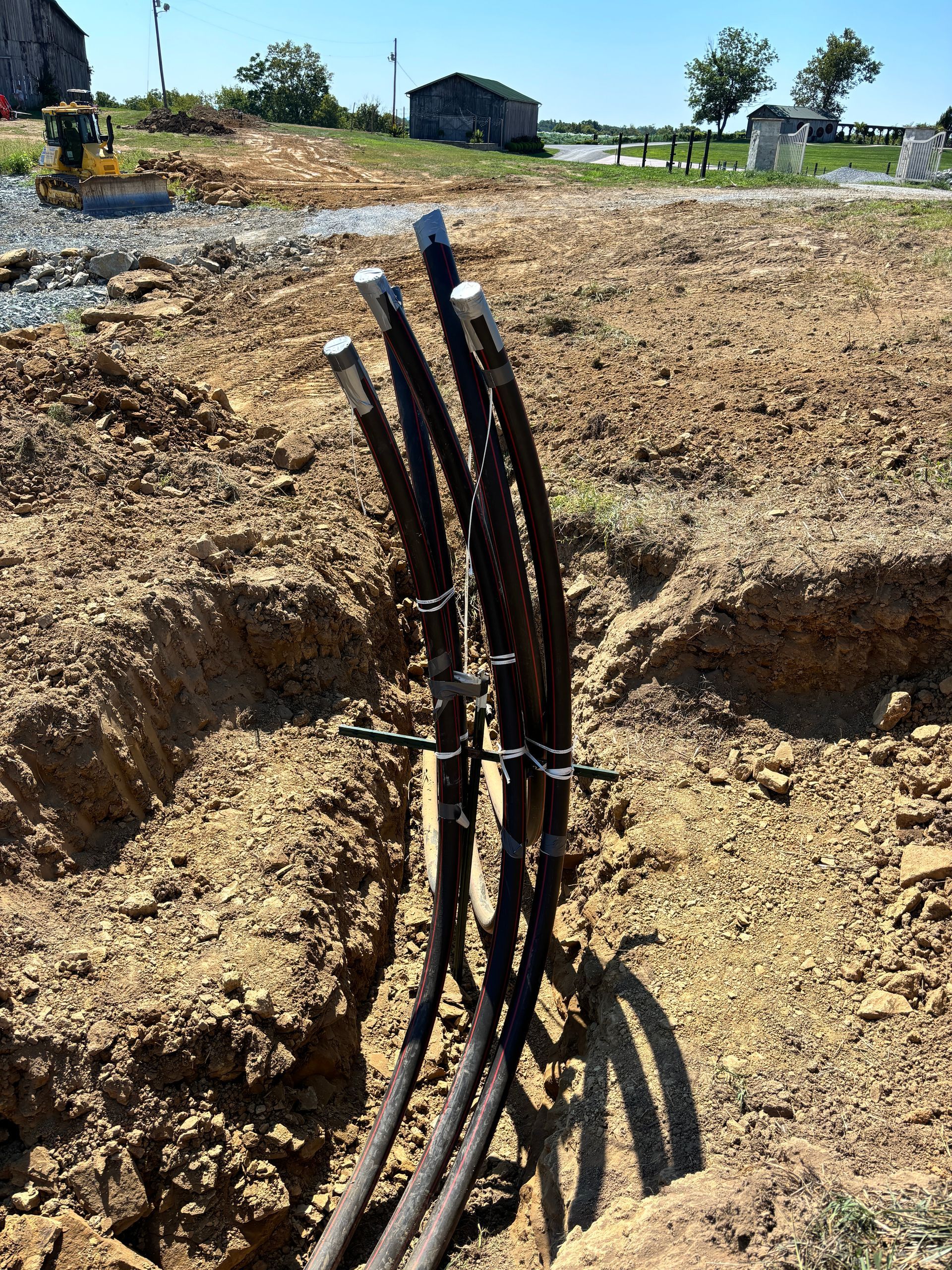
Underground utility work involves trenching, laying, and connecting the systems that power, supply, and service a property — water lines, sewer lines, septic systems, electrical conduit, gas lines, drainage pipe, and more. It's one of the most critical phases of any construction project because mistakes made below grade are expensive, disruptive, and sometimes dangerous to correct.
Kentucky Legacy Construction approaches every underground utility project with a level of care that goes beyond just digging a trench. We work with property owners, builders, and local authorities to make sure every system is installed correctly, at the right depth, with the right materials — the first time.
WHAT'S INCLUDED
Our Underground Utility Services
01
Septic System Installation
Full septic system design, excavation, and installation for residential and rural properties
02
Water Line Installation
Trenching and laying water supply lines to code and spec
03
Sewer Line Installation
Connecting structures to municipal sewer systems or private waste systems
04
Utility Trenching
Precision trenching for electric, gas, telecom, and other underground lines
05
Drainage Pipe Installation
Installing underground drainage systems to manage water flow
06
Pipe Bedding & Backfill
compaction to protect installed utilities
07
Utility Crossings
Running utility lines under roads, driveways, and other obstacles
WHY CHOOSE KENTUCKY LEGACY FOR UNDERGROUND UTILITIES
Precision Underground Work You Can Count On
15+ Years of Utility Experience
We've installed septic systems, water lines, and utility trenches across dozens of Central Kentucky properties. We know what works.
Veteran-Owned Accountability
If it's going underground on our watch, it's going in correctly.
No Shortcuts Below Grade
Underground mistakes cost far more to fix than to prevent. We do the job right the first time — proper depth, proper bedding, proper compaction.
Coordination With Local Authorities
We're familiar with permitting and inspection requirements across Central Kentucky and can help navigate the process so your project stays on schedule.
OUR PROCESS
How We Approach Every Underground Utility Project
1. Site Review & Utility Locating
Before any trenching begins, we review the project plans and ensure all existing underground utilities are located and marked. Safety first — always.
2. Trenching
We excavate trenches to the required depth and width for each utility type, following grade specifications and local code requirements. Our operators are precise — trench walls are clean, depths are consistent, and the work is done efficiently.
3. Pipe & Utility Installation
We install the specified pipe or conduit with proper bedding material — crushed stone, sand, or engineered fill — depending on the utility type and project spec. Connections are made accurately and inspected before backfill begins.
4. Backfill & Compaction
We backfill the trench in lifts, compacting at each layer to prevent settling. This step is critical — improper backfill leads to sinkholes, damaged pipe, and failed systems over time.
5. Final Grade & Restoration
The surface is brought back to grade and the area is cleaned up. Any required inspections are coordinated and completed before the project is signed off.
FREQUENTLY ASKED QUESTIONS
Common Questions About Underground Utilities & Trenching
Do I need a permit for septic installation in Kentucky?
Yes. Septic system installations in Kentucky require a permit from the local health department. The system design must be approved before installation begins. We work with property owners to understand the permitting process and ensure everything is completed in the right order.
How deep do utility lines need to be buried?
Depth requirements vary by utility type and local code. Water lines in Central Kentucky typically need to be buried below the frost line (around 18–24 inches). Electrical conduit, sewer lines, and other utilities have their own depth requirements. We follow all applicable codes for every installation.
Can you install utilities on rural or undeveloped land?
Absolutely. In fact, much of our utility work is on rural and agricultural properties where septic systems and well water lines are the standard. We're very familiar with rural utility installation across Central Kentucky.
What's the difference between a septic system and a sewer connection?
A septic system is a self-contained, on-site wastewater treatment system — common in rural areas without municipal sewer access. A sewer connection ties your property into a public wastewater system maintained by the city or county. Which one you need depends on your property location and what's available in your area.
How long does utility trenching typically take?
A straightforward residential utility trench can often be completed in a day or two. Larger projects with multiple utility types, longer runs, or complex terrain may take longer. We provide timeline estimates during your project consultation.
BUILDING NEW OR UPDATING EXISTING UTILITIES?
Talk to Our Team — We'll Get It Done Right
Underground utility work isn't a place to cut corners. Kentucky Legacy Construction brings the experience, equipment, and accountability to get your utilities installed correctly the first time. Serving Lancaster, Danville, Lexington, and all of Central Kentucky.